Range lets you rest on your line
Watch a small child crouch to look at a beetle. Heels down, back long, head up, and she stays there for minutes. Nothing about it looks like effort.
Now watch an adult stand up straight for a photo. The chest lifts, the shoulders pull back, the jaw sets. Ten seconds later it sags. Standing tall has become work.
01
Your strongest position should cost you nothing.
In the chapter on the head, we drew one straight line through a strong body. It runs from the ankle, through the knee, the hip and the shoulder, to the ear. On the line, you are strong. Off it, you are weaker.
That line is meant to be where your body rests. Each part sits on the one below, and the muscles are free to move you.
Range is what lets you rest there. It is enough length in your muscles, tendons and the tissue around each joint to reach the line and relax on it. Without that length, being on the line becomes something you have to hold.
02
Modern life pulls you off the line.
Your body keeps what you use and lets go of the rest. Most of a modern day is spent in a chair: hips bent, shoulders rolled forward, head in front of the body. The front of the hip and the chest get used to being short.
That shape squeezes more than the joints. In an American study, 70 volunteers blew into a lung test sitting upright, slumped and standing. Slumped, they moved less air than sitting upright.
03
In the water, a tight chest fights every reach.
In front crawl, your arm reaches long, overhead and past your ear. The socket of your shoulder sits on your shoulder blade, and to reach, the blade has to tip back with the arm.
Researchers measured 50 people with healthy shoulders as they lifted their arms. The ones whose pectoralis minor, a small chest muscle that pulls on the front of the shoulder blade, was short kept the blade tipped forward as the arm went up. The arm was rising from a socket pointed the wrong way.
So a swimmer with a tight chest and tight lats pulls against them on every stroke, just to get long. That effort is spent before the pull even starts. The reach is shorter, and each stroke moves you less far.
04
On the run, a tight hip switches off your biggest muscle.
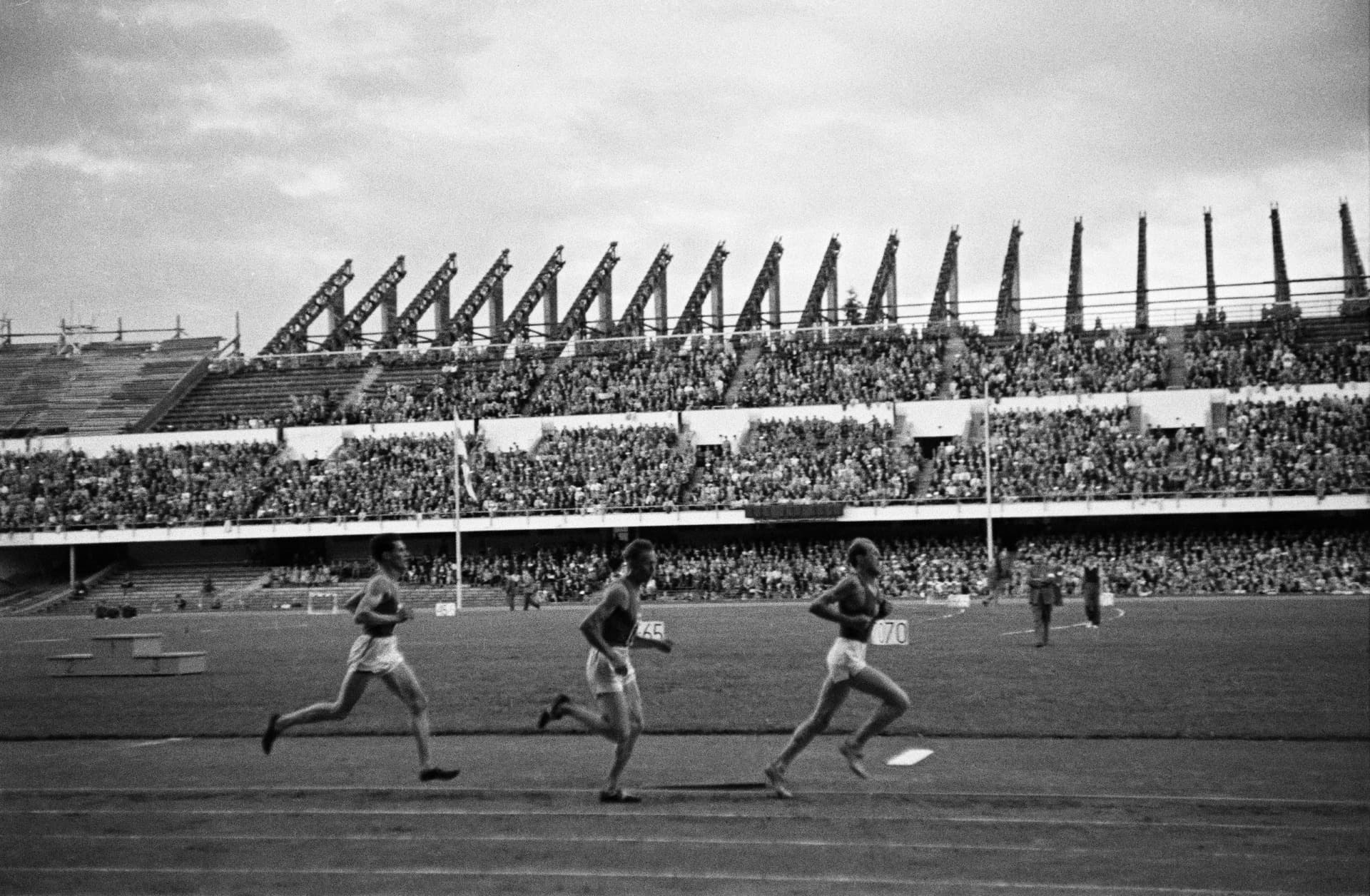
With each stride your back leg swings out behind you. That only happens if the front of the hip lets it. When the hip runs out, the pelvis tips forward to let the leg go further.
In Australia, 14 elite athletes ran on a treadmill at 20 kilometres an hour. The ones whose hips extended least behind them tipped their pelvis forward most. Where the hip stopped, the pelvis moved instead.
The glute is the biggest muscle in your body, and it drives the leg back. American researchers split 40 college footballers by how tight the front of their hips was, then had them squat. The tight group used their glutes about 40 percent less. They made the same force at the hip, with less of it coming from the glute.
05
On the bike, stiff hips squeeze your breath.
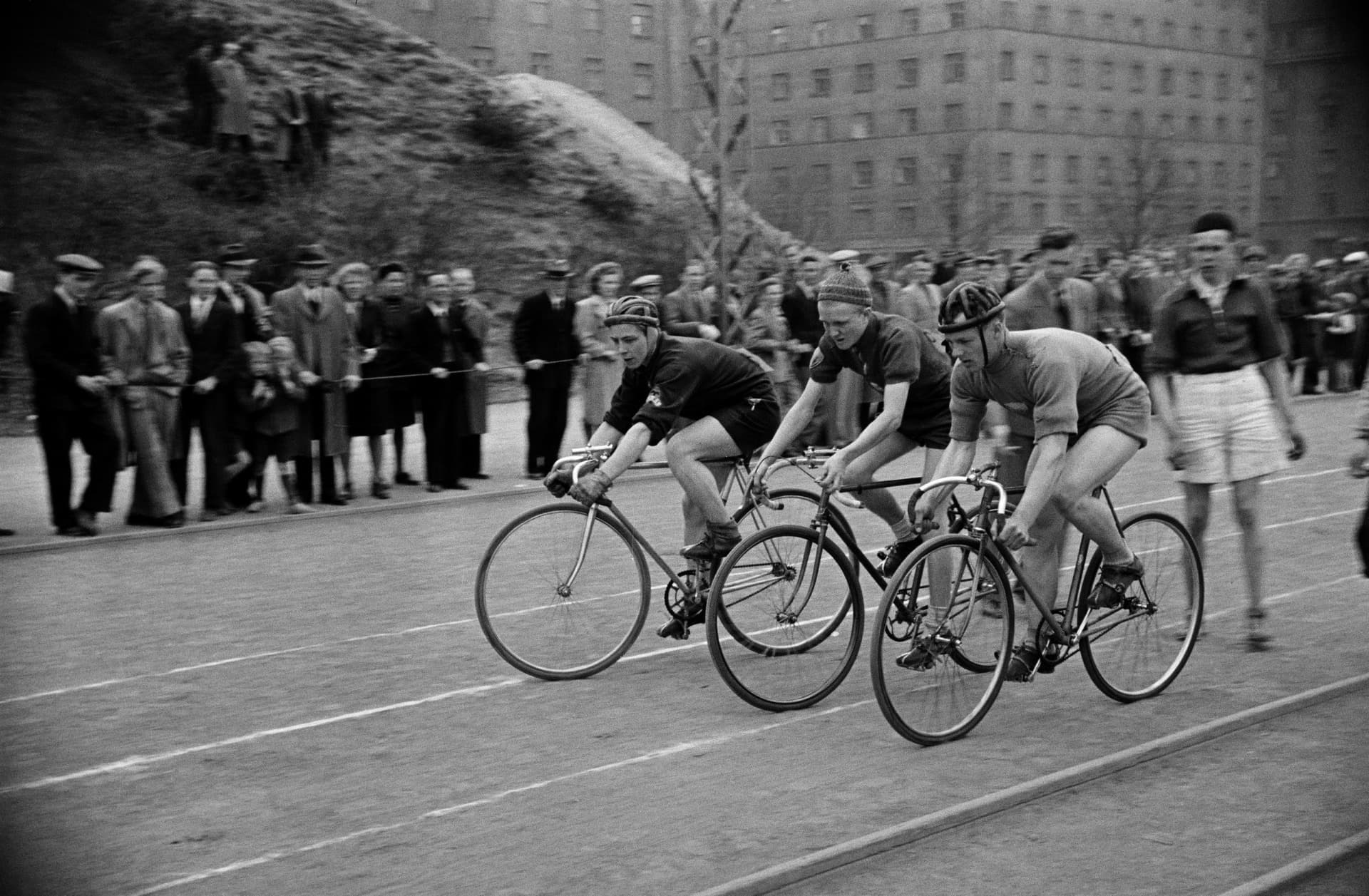
To get low on a bike, you tilt forward at the hips. The pelvis rolls forward on the saddle and the back stays long. If the hips will not tilt, the back rounds instead, and the ribs fold down towards the belly.
In Canada, 11 trained cyclists rode hard in three positions. In the lowest, with the elbows close together, breathing took more work than riding upright. The more their arms closed in around the chest, the harder they had to work to breathe.
06
Without range, something else bends.
Your body will always finish the movement. When one joint runs out, the one next to it moves instead. The low back arches for the reach, the pelvis tips for the stride, the spine rounds for the bike.
A very steep descent, taken slowly, shows it best. Every step is braking, and braking needs a deep bend at the ankle, knee and hip. Without the range to sink that low, you brake on stiff legs, and your knees take the hammering.
Each borrow costs effort and strength. With range, you stay on the line and use your whole body.
07
Range is built by going there often.
Yoga builds range. You take a shape that opens a joint, like a low lunge for the front of the hip or puppy pose for the chest and lats, and you stay long enough to let it open. Then a different shape makes the muscles work at that new length, the way a bridge works the glutes with the front of the hip long.
Your breath sets the limit. Go as far as you can while breathing calmly, and no further. Progress looks like this: the same position arrives sooner and costs less, until one day you are on the line without trying.
08
Try this.
Stand with your back against a wall, heels a hand's width out. Let your bottom, shoulder blades and the back of your head touch the wall. Now raise both arms overhead and try to touch the wall with your thumbs.
Did your low back peel away, or your chin lift? That is the compensation you swim with.
Then kneel in a low lunge for one minute each side, breathing slowly, and try the wall again.
What this means for you
You are strongest on your line, and range is what lets you rest on it. Without it, you fight your own body on every stroke, stride and pedal stroke, and something else bends to make up for it.
So give range its own time, alongside power, structure and balance. Go there often, breathe, and let the line become where your body lives again.
Sources
- Lin, Parthasarathy, Taylor, Pucci, Hendrix and Makhsous 2006. Archives of Physical Medicine and Rehabilitation 87:504-509. Effect of different sitting postures on lung capacity, expiratory flow, and lumbar lordosis.
- Borstad and Ludewig 2005. Journal of Orthopaedic and Sports Physical Therapy 35:227-238. The effect of long versus short pectoralis minor resting length on scapular kinematics in healthy individuals.
- Schache, Blanch and Murphy 2000. British Journal of Sports Medicine 34:279-283. Relation of anterior pelvic tilt during running to clinical and kinematic measures of hip extension.
- Mills et al. 2015. International Journal of Sports Physical Therapy 10:946-954. Effect of restricted hip flexor muscle length on hip extensor muscle activity and lower extremity biomechanics in college-aged female soccer players.
- Charlton, Ramsook, Mitchell, Hunt, Puyat and Guenette 2017. Medicine and Science in Sports and Exercise 49:2578-2584. Respiratory mechanical and cardiorespiratory consequences of cycling with aerobars.