Your mind comes with you
You come home after a long day with a heavy head. Everything feels like too much, and the sofa is calling. You go out anyway, for a run, a ride or a swim, mostly because you said you would. You are back 40 minutes later, and something has changed. The problem you carried out the door is still there, but it has shrunk to its real size. You feel lighter, and you have more energy than when you left.
01
The mind is part of the body.
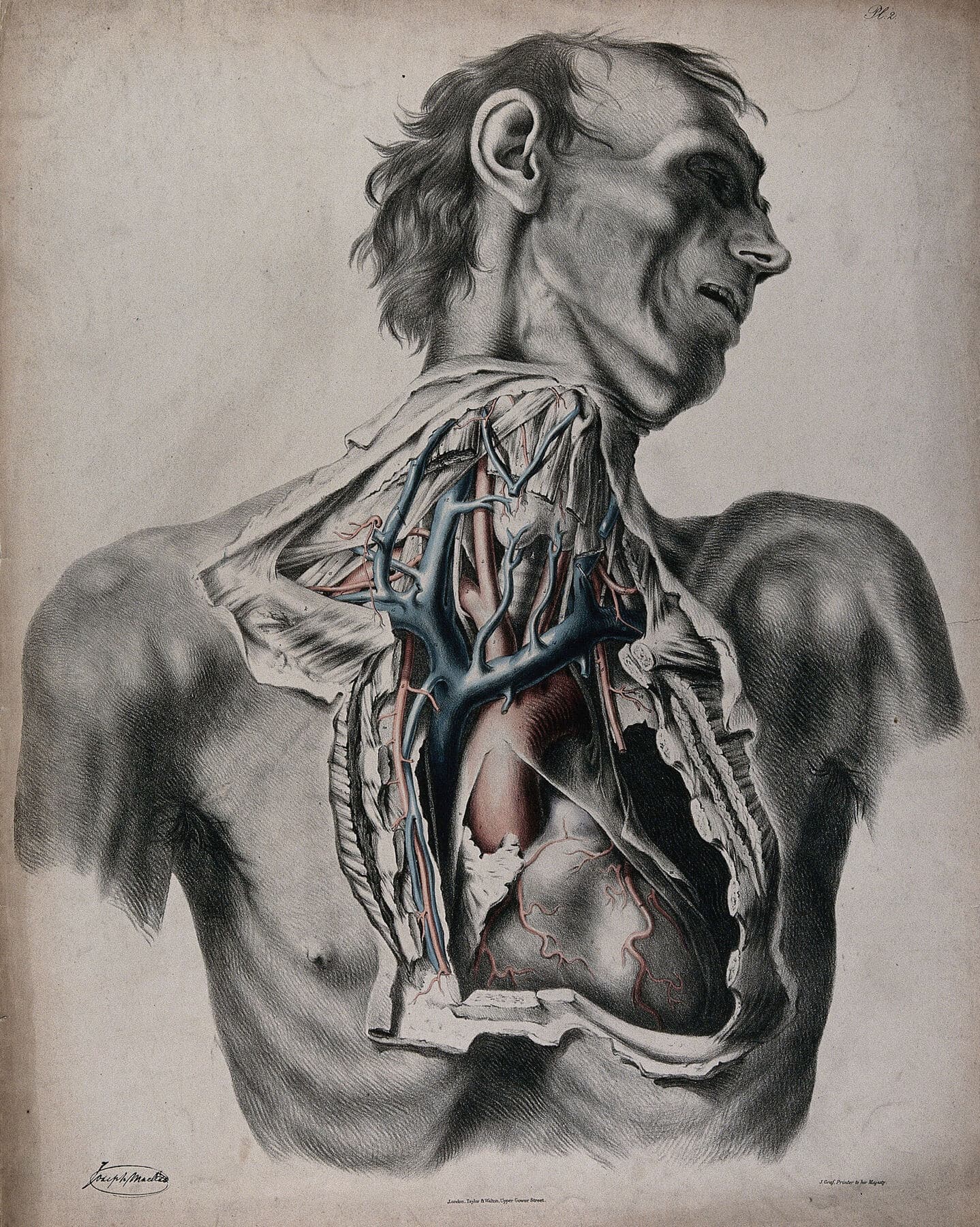
We tend to talk about the body and the mind as two things. One runs, lifts and gets tired. The other thinks, worries and feels. But the brain is an organ. It is fed by the same heart and the same blood as your legs, and it lives in the same body you train or neglect. When that body becomes more capable, the mind feels it, and it feels it from two sides. The first is the plain confidence of having a body that can do things. The second is what the activity itself does to how you feel, day after day.
02
A body that can do things.
There is a quiet kind of confidence in knowing you can carry the shopping up four floors, swim out to the buoy or walk all day in the hills. It does not need anyone else to see it. You know it, because you did it. When researchers pooled 113 studies of exercise and self-esteem in adults, exercise brought a small rise in how people valued themselves overall. The rise was larger in the people whose fitness had clearly improved. So it was not only the act of exercising that helped. It was becoming more capable.
03
You get the energy back.
It sounds backwards that spending energy would give you more of it. Yet that is what happens. In a small trial in the United States, 36 young adults who felt tired all the time, with no illness to explain it, were split into three groups. Two groups exercised three times a week for six weeks, one at a low effort and one at a moderate effort. The third group changed nothing. Both exercise groups felt more energetic by the end, and their tiredness fell most in the low-effort group. The change did not depend on how much fitter they had become, so you do not have to wait for the fitness before you feel it. It fits the way the engine is built anyway, with most of the work done as easy movement.
04
It treats, not only prevents.
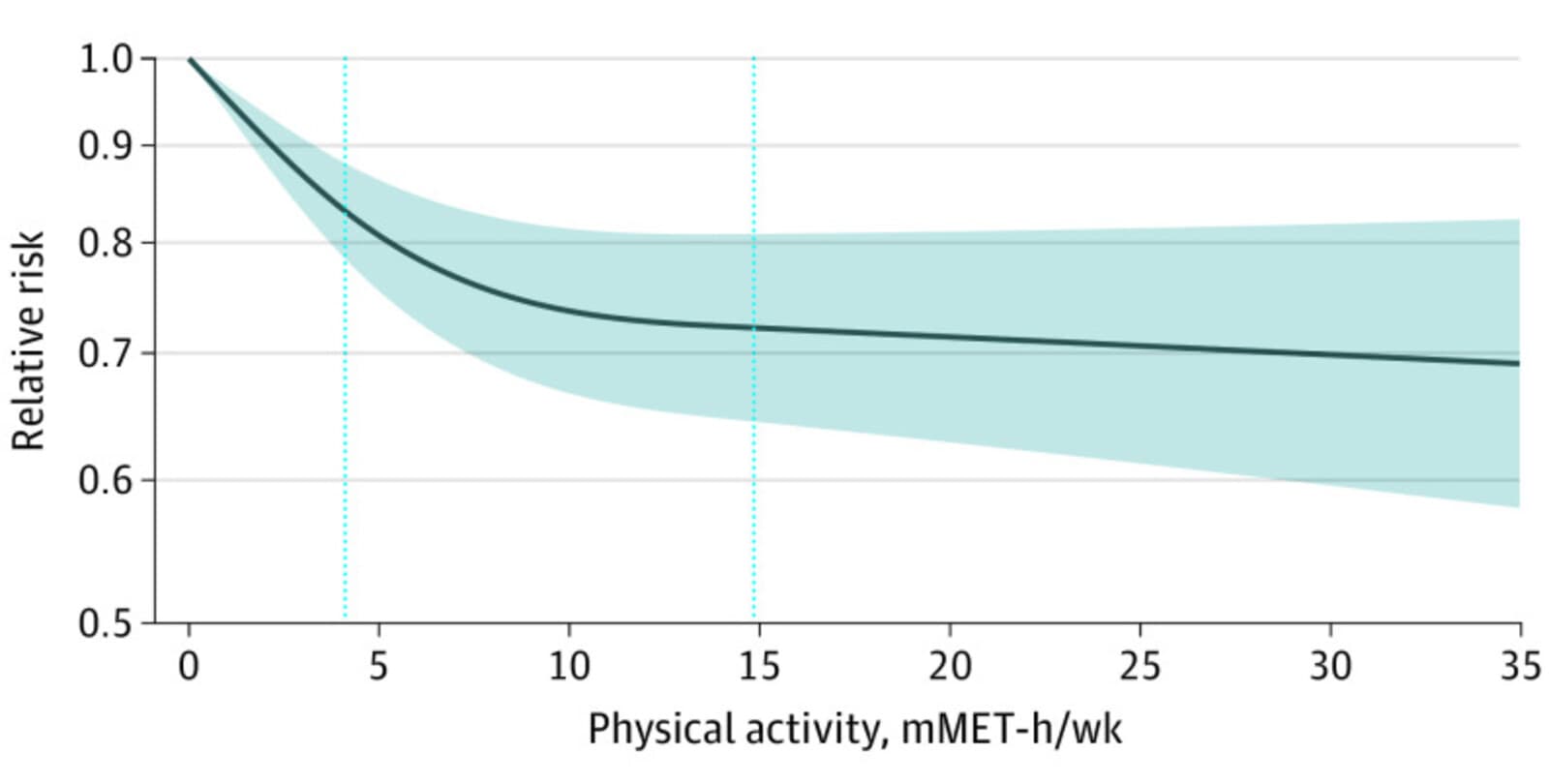
Being active already lowers the chance that depression starts at all. The harder question is what exercise does for people who are already depressed. Cochrane, an independent network that pools trials to guide doctors, updated its review of exercise for depression in 2026. Across 57 trials of adults with depression, exercise reduced symptoms more than no treatment or a control. In the trials that compared them head to head, exercise worked about as well as talking therapy, and about as well as antidepressant medicine.
A larger review of 218 trials, with more than 14,000 people with major depression, points the same way. Walking or jogging, yoga and strength training gave the clearest benefits. The harder people were asked to work, the bigger the effect tended to be. Many trials in both reviews were small or had flaws, which is why the honest word is comparable, not better. The authors concluded that exercise belongs among the core treatments for depression, alongside talking therapy and medicine rather than in place of them.
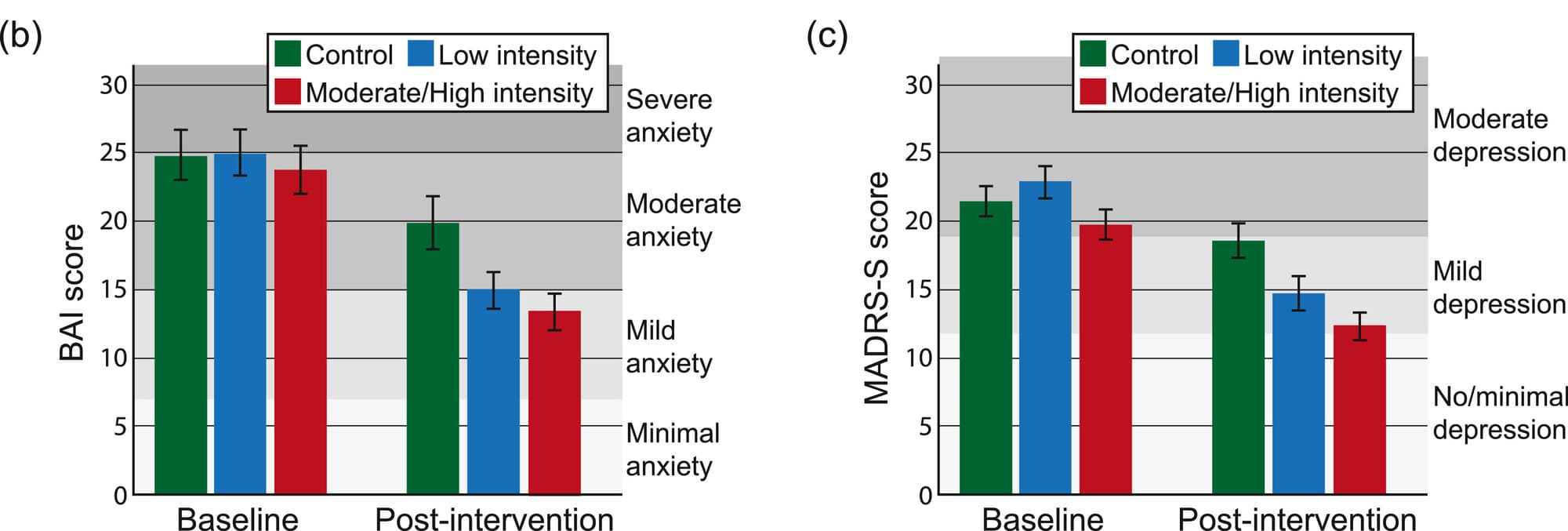
Anxiety shows a similar picture. In Sweden, a trial took 286 patients with anxiety, recruited through their family doctors. For 12 weeks, two groups trained three times a week, mixing aerobic and strength work, at either a moderate or a harder effort. A third group carried on with their usual care. Both training groups improved more than usual care, in anxiety and in low mood alike, and the harder the training, the more anxiety tended to ease.
05
Train the body, and the mind follows.
This is not running away from your problems. It is bringing your mind along. Every walk, every swim and every set builds a body you can trust, and that trust is felt in the head as much as in the legs. Easy movement is enough to start, and the energy tends to come back sooner than the fitness. Over the months, build all three layers and let the confidence grow with them.
What this means for you
When your head is heavy, move. Go easy if that is all you have, and go anyway. If you are being treated for depression or anxiety, add the movement to that treatment rather than swapping one for the other. To feel good mentally, first feel good physically and be active. The body and the mind are one system.
Sources
- Spence, McGannon and Poon 2005. Journal of Sport and Exercise Psychology 27:311-334. Exercise and global self-esteem, a review of 113 studies.
- Puetz, Flowers and O'Connor 2008. Psychotherapy and Psychosomatics 77:167-174. Aerobic exercise and feelings of energy in young adults with persistent fatigue.
- Clegg et al. 2026. Cochrane Database of Systematic Reviews CD004366. Exercise for depression.
- Noetel et al. 2024. BMJ 384:e075847. Exercise for depression, a network meta-analysis of 218 trials.
- Henriksson et al. 2022. Journal of Affective Disorders 297:26-34. Exercise and anxiety in primary care patients, a randomised trial.