Power: make the whole body fire
You are an hour into a trail run, and the path turns into a short pitch of rock steps. At twenty you went up it in three quick pushes. Now you climb it one heavy step at a time, hands on your knees.
Your heart and lungs were fine. What went missing was speed.
01
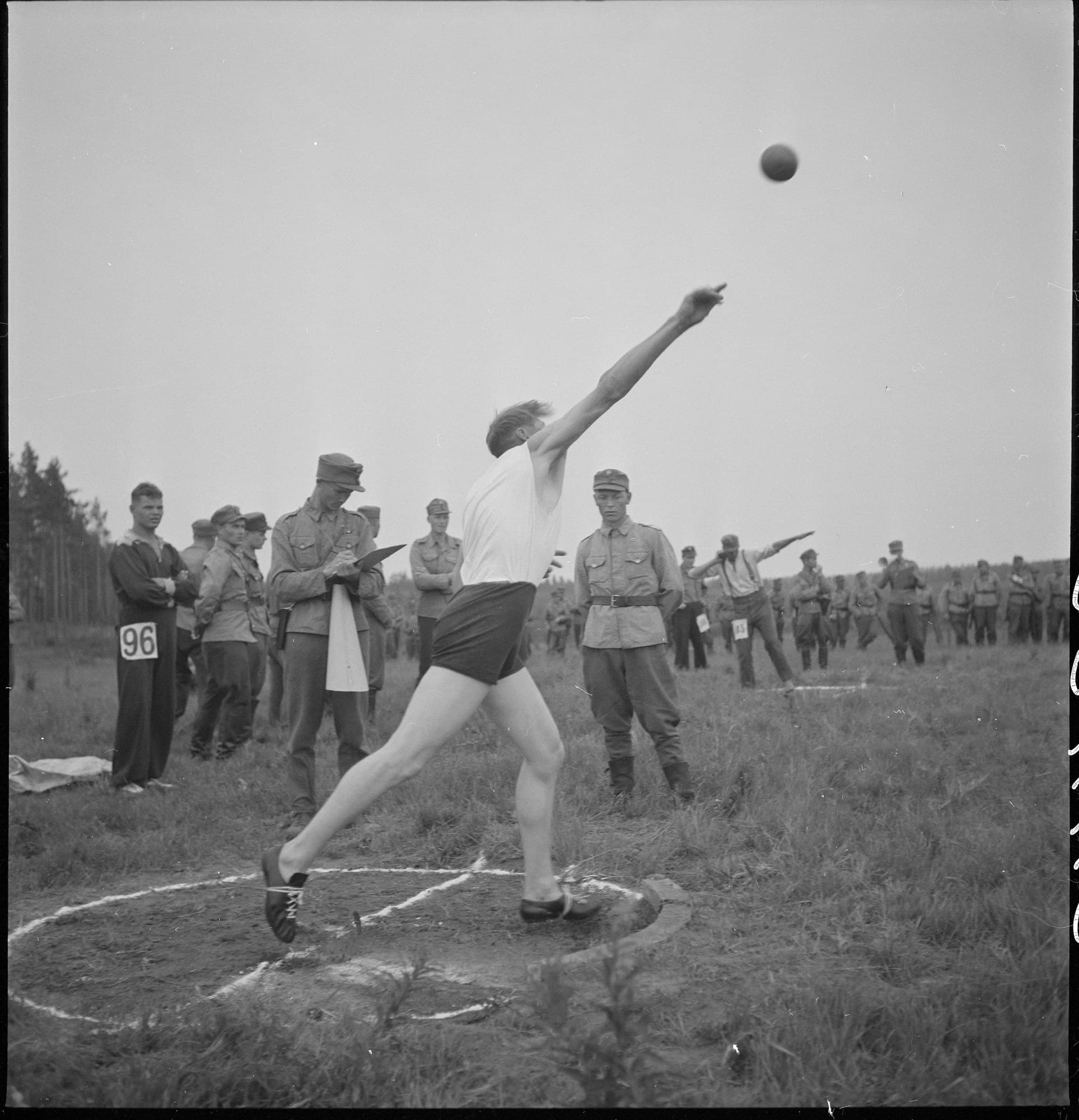
Power is force, made fast.
Strength is how hard you can push. Power is how quickly you can push that hard. The rock step and the surge to stay with the rider ahead each give you a fraction of a second. If you cannot push hard within that moment, it does not help to be strong. The moment has passed.
Power never comes from one muscle. The push starts at your foot, runs up through your ankle, knee and hip, through your trunk and out to your arms. Every link has to fire at the same moment, as one body. Power is timing as much as it is muscle.
02
Power is the first thing you lose.
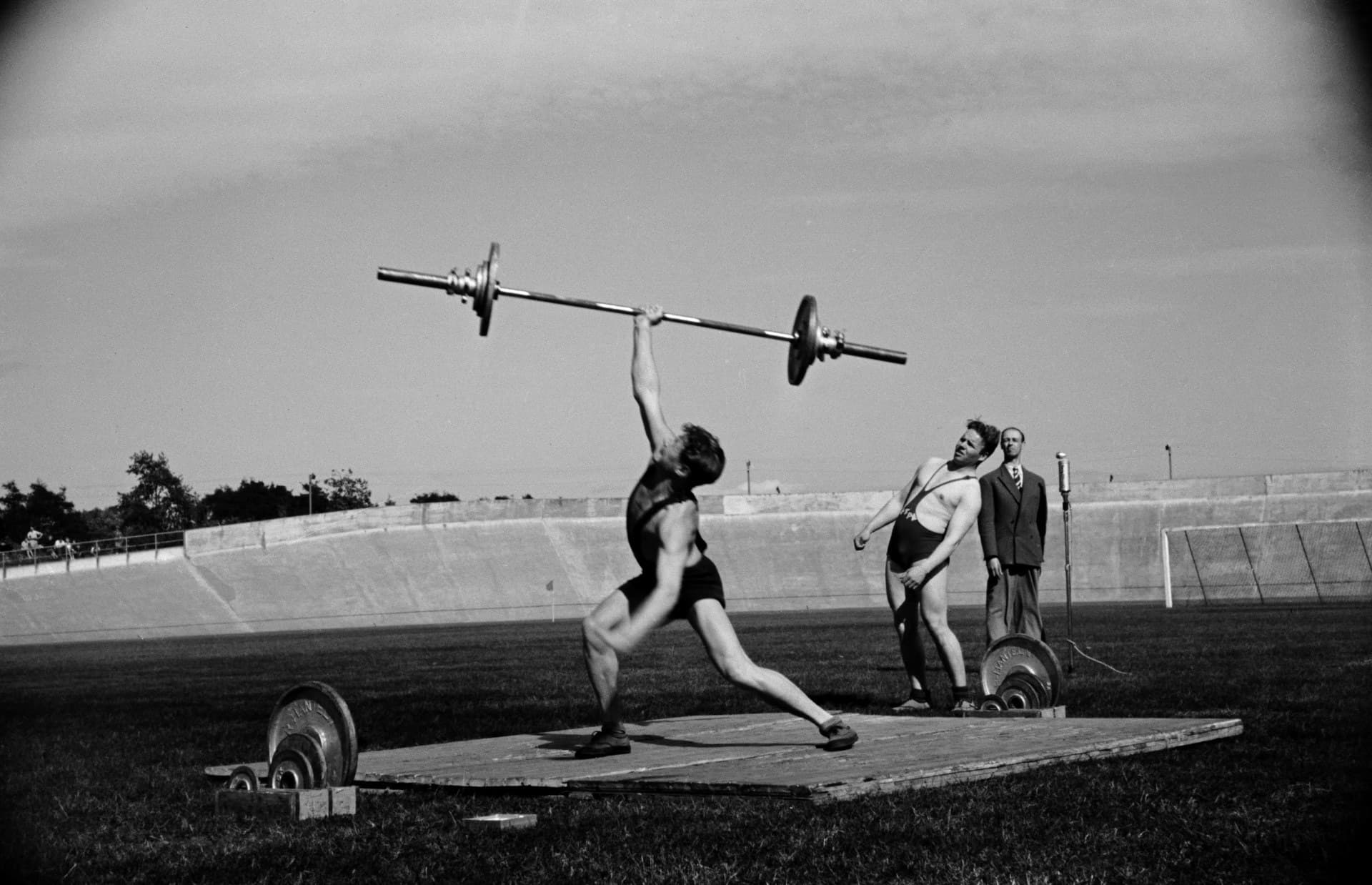
At the World Masters Weightlifting Championships in 1999, researchers tested 54 lifters aged 40 to 87. Weightlifting is power training: the bar goes from the floor to overhead in one fast pull. They also tested a similar number of people of the same ages who did not train.
As people got older, they lost power about twice as fast as they lost strength, in both groups. The lifters lost power at the same rate as everyone else. But they started so much higher that an 85-year-old lifter was as powerful as a 65-year-old who did not train. The lifters were twenty years ahead.
Long, steady sessions will not keep it for you. Every stride, pedal stroke and swim stroke of a long run, ride or swim is far below your fastest. You get very good at going for hours, and slowly lose the ability to go fast for a second.
03
Power is built fast, against real load.
Hours at an easy pace do not teach your body to be fast. Power is built by moving something heavy as fast as you can, with your whole body, starting from the ground. Heavy enough that your body has to work hard. Light enough that it still moves fast.
A kettlebell swing is the clearest example. Your hips snap forward and throw the bell. Your hands only hold on, and your arms never lift the bell. The bell floats up to chest height because your hips sent it there.
Researchers in England measured 16 men swinging bells of 16, 24 and 32 kilograms. The men produced more power in a swing than in a back squat, and about as much as in a jump squat. So a swing works your body like a jump, with your feet on the ground.
The clean is the same idea, finished differently. Your hips send the bell up close to your body, and it rolls over your hand to rest on your forearm at your chest. One fast push from the floor, caught softly at the top.
04
Fast needs fresh.
Power training looks nothing like a workout that leaves you gasping. The efforts are short and few, each one as fast and clean as you can make it.
Between efforts, you rest until you feel fresh, and that takes minutes, not seconds. Your muscles fuel their fastest efforts from a small store that empties in seconds and takes minutes to refill. Your power comes back only as fast as that store does.
Start an effort tired and you are not training power.
05
Every rep fast, or it does not count.
In Spain, 22 young men squatted with the same weights for eight weeks. One group ended each set when the bar was moving 20 percent slower than on the first rep. The other group kept going until it was 40 percent slower.
The early stoppers did fewer reps: about six for every ten the other group did. Yet they gained as much strength, and their jump improved by 9.5 percent, against 3.5 percent for the other group. The group that ground on lost part of its fastest type of muscle fibre. The early stoppers kept theirs.
Both groups got better, but the extra reps cost part of the gain. A slow rep teaches your body to be slow.
06
You can hear it getting better.
Progress in power is easy to notice. The bell moves faster for the same effort. The swing floats higher without you trying. A clean that once crashed onto your forearm now lands without a sound, exactly where you meant it to.
Out on the trail, you notice it too. The rock steps take one quick push each. When the rider ahead speeds up, you go with them.
07
Try this.
Next time you swing a kettlebell, watch the top of each swing. A fast swing floats there for a moment, weightless. A bell that feels heavy on the way up means your arms are doing the work, or the bell is too heavy.
Pick a bell light enough to keep every rep fast. Brace for each rep, and breathe out sharply at the top. Then rest until your legs and your breath feel fresh, even if that takes longer than the effort did.
What this means for you
Power is making force quickly, with your whole body firing at once. Without it, you cannot move fast. You can keep going, but you cannot get up the steep step or go with the surge.
It fades faster than strength, and long, steady sessions do not keep it. So train it on purpose, alongside structure, balance and range. Few efforts, every one fast, and full rest between them.
Sources
- Pearson et al. 2002. Medicine and Science in Sports and Exercise 34:1199-1206. Muscle function in elite master weightlifters.
- Lake and Lauder 2012. Journal of Strength and Conditioning Research 26:3209-3216. Mechanical demands of kettlebell swing exercise.
- Bogdanis et al. 1995. Journal of Physiology 482:467-480. Recovery of power output and muscle metabolites following 30 s of maximal sprint cycling in man.
- Pareja-Blanco et al. 2017. Scandinavian Journal of Medicine and Science in Sports 27:724-735. Effects of velocity loss during resistance training on athletic performance, strength gains and muscle adaptations.