The animal that left Africa
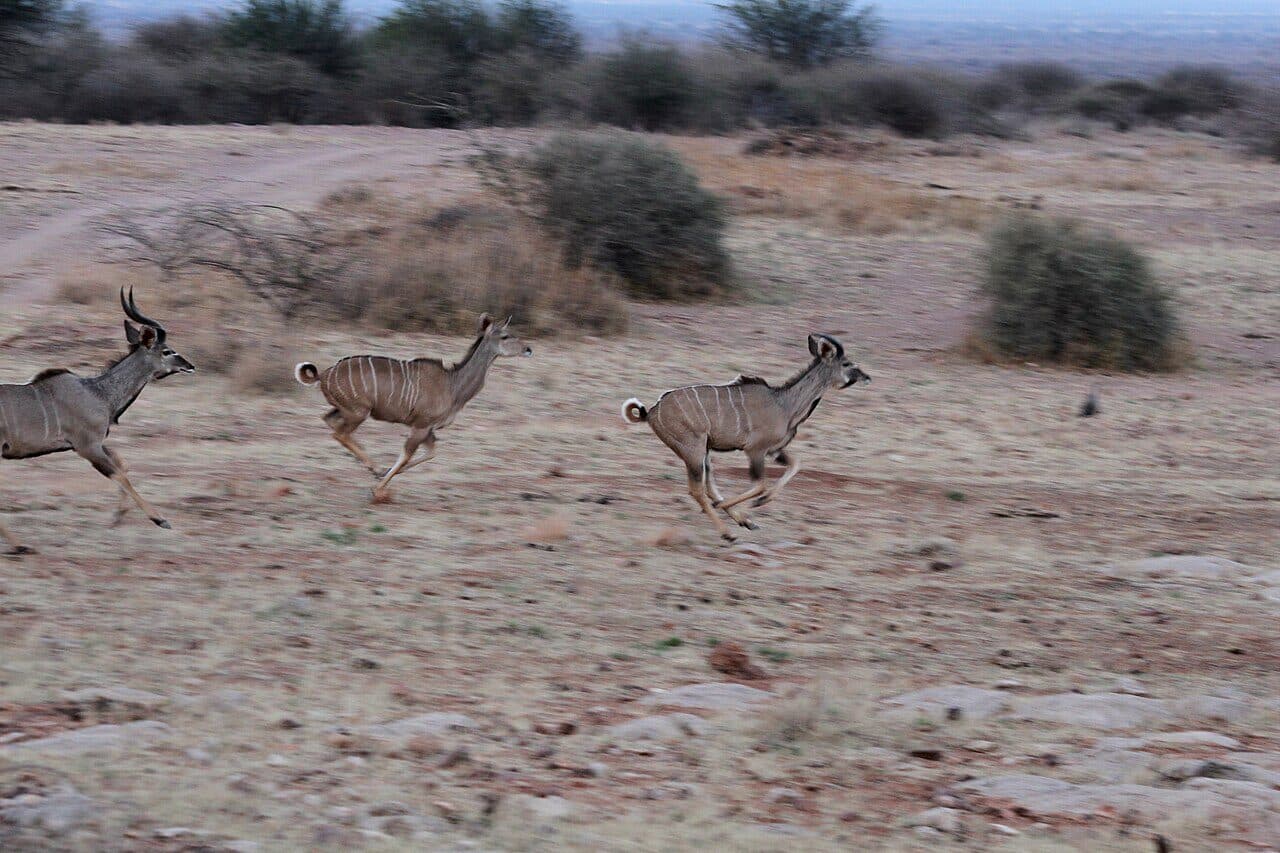
It is the middle of the day in the Kalahari Desert, and the air is close to 40 degrees. A hunter is running after a kudu, a big antelope that could leave him behind in seconds. He does not try to catch it. He only keeps it moving. Each time the kudu bolts, it runs until it is too hot and has to stop in the shade to cool down. Each time, the hunter follows its tracks and moves it on again before it has recovered.
He is not fast. He is simply still going. Hunters in the Kalahari have been filmed doing this for three and a half to five hours, over 25 to 35 kilometres. At the end, the kudu stands still. It has overheated and cannot run any more, and the man walks up to it.
That hunter has the same body you have.
01
What wins the chase.
The kudu is faster and stronger. What the hunter has is a body that can keep working in the heat, and it does that by sweating. You have millions of sweat glands, about ten times as many as a chimpanzee, patch of skin for patch of skin. Your body hair is so fine that the air reaches your skin, so the sweat cools you while you are still moving. The kudu cannot cool itself that way. It has to stop, and the hunter does not.
Your legs help too. The tendons in your heels and the arches of your feet stretch as each foot lands, then spring back as it pushes off. That returns about half the energy each stride would otherwise cost. So every step is cheaper than it looks, and a long day on your feet is possible.
02
It kept going.
That body did not stay in the desert. Humans spread out of Africa and kept going until they had reached almost everywhere there is. And wherever they went, the same body turned out to be good at whatever the place asked of it.
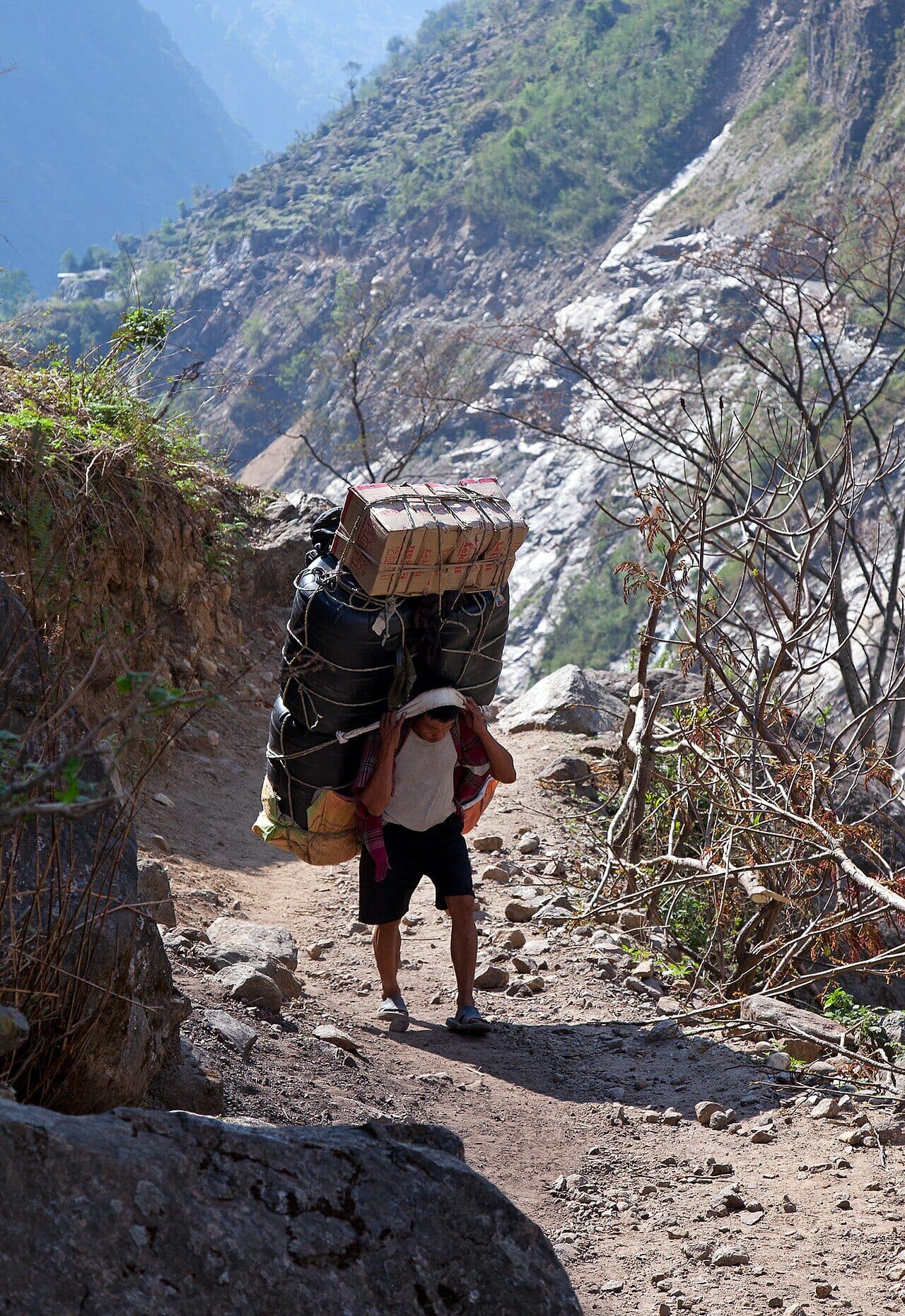
In the mountains of Nepal, porters carry goods up steep trails for days. Their loads often weigh as much as they do, and sometimes twice as much. Scientists who measured them found they do it for far less energy than anyone expected, and they still cannot fully explain how.
At sea, one swimmer set off from Sweden and swam to Poland, 160 kilometres in 55 hours, without leaving the water and without sleep. Towards the end his thinking went foggy, and he lost track of stretches of time. His arms kept turning anyway.
Under the water, your body changes gear the moment your face goes in. Your heart slows, your spleen squeezes extra red blood cells into your blood, and you spend your oxygen more slowly. The Bajau people of Southeast Asia have lived from diving for generations, and their spleens are about 50 percent larger than those of their neighbours on land. The sea has shaped their bodies.
And across the ocean, a man of 70 paddled a kayak alone over the Atlantic. It took him 110 days, and nothing moved the boat but his arms.
03
No other animal does all of it.
A cheetah is faster than you. A gorilla is stronger, and a seal dives deeper. But none of them could chase an antelope through the midday heat, carry a load over a mountain pass, swim from one country to another and paddle across an ocean. A human can do all of it.
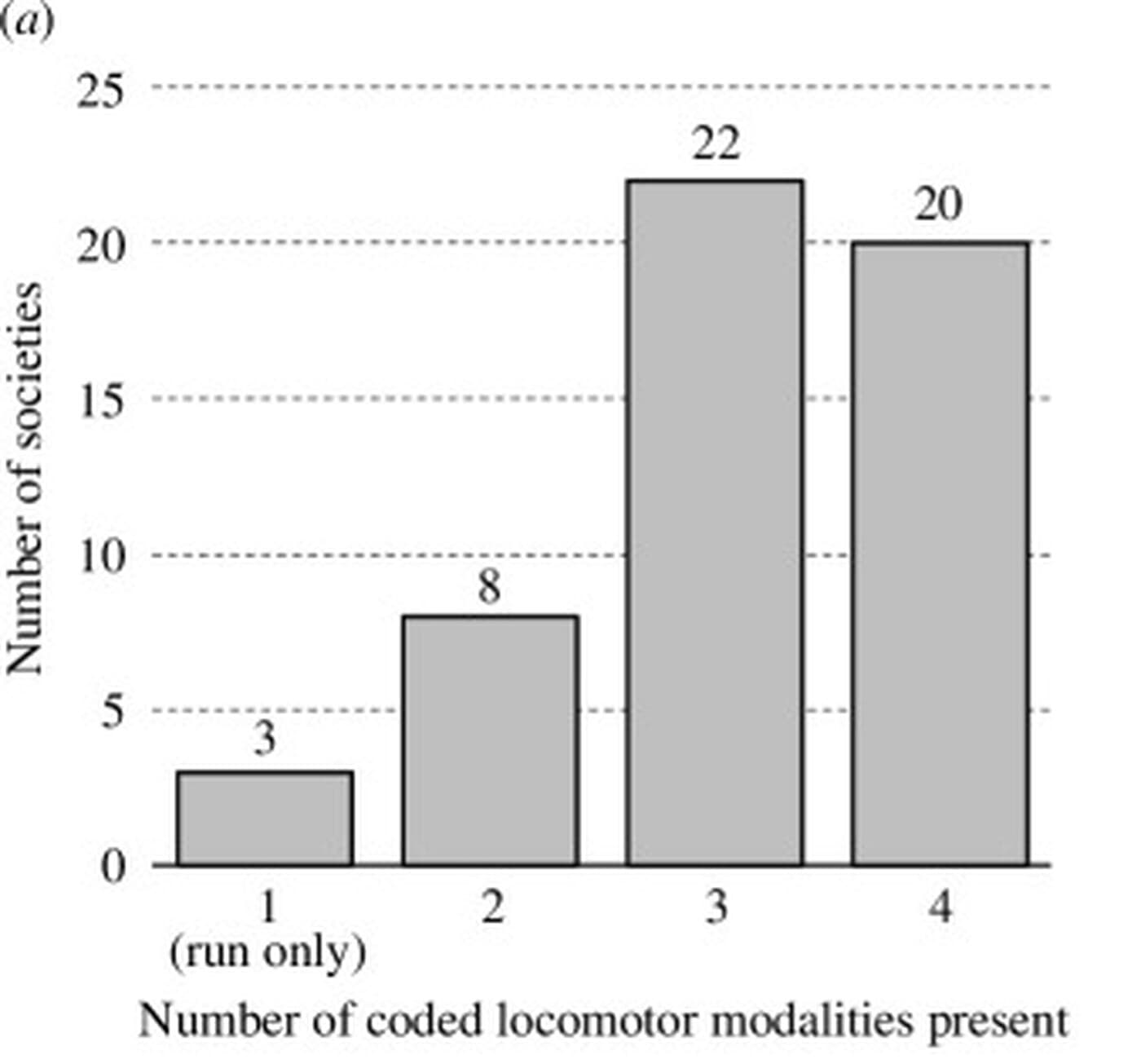
Researchers once read more than 900 accounts of hunter-gatherer peoples from every kind of landscape. Everywhere they looked, they found people who ran, climbed, swam and dived well. They concluded that this range is a large part of why humans thrive almost everywhere on Earth. We are not specialists. We are the animal that can go anywhere.
What this means for you
Make no mistake. The human body is an incredibly capable one. It can cross almost any ground on Earth, on land, in water and up high, and keep crossing it for a very long way.
Most days, you ask almost nothing of it. So the next time a long walk, a cold swim, a steep climb or a heavy pack looks like too much, think of the hunter in the Kalahari. You have his body. Then go and ask a little more of yours.
It is the birthright of every human being to cross any terrain on Earth. That birthright is still within you, and your body yearns for it.
Sources
- Liebenberg 2006. Current Anthropology 47:1017-1026. Persistence hunting in the Kalahari.
- Kamberov et al. 2018. Journal of Human Evolution 125:99-105. Sweat glands in humans and other primates.
- Bramble and Lieberman 2004. Nature 432:345-352. Tendons, arches and endurance running.
- Bastien et al. 2005. Science 308:1755. Nepalese porters.
- Euronews, 4 August 2026. The first swim across the Baltic Sea.
- Lindholm and Lundgren 2009. Journal of Applied Physiology 106:284-292. The human dive reflex.
- Ilardo et al. 2018. Cell 173:569-580. Diving adaptations in the Bajau.
- Guinness World Records. Oldest person to kayak across an ocean.
- Brill, Mirazon-Lahr and Dyble 2024. Proceedings of the Royal Society B 291:20242553. Versatility in hunter-gatherers.