Balance: trust your legs on any ground
You come over the top of a long climb, and the path drops away in front of you. It is steep and covered in loose rock. Every stone could roll.
One kind of runner brakes. Their legs go stiff, their arms go out, and their eyes fix on their feet. They pick their way down one careful step at a time.
Another kind lets go. Their body keeps moving forward, and their legs land wherever the ground puts them. A stone rolls, and a foot catches it. They never had to think about it.
01
Balance is what lets you let go.
The second runner is not braver. They trust their legs. They know that when a stone moves, their body will sort it out before they have to.
That trust changes everything about the run. A body that trusts its footing stays relaxed, and a relaxed body flows down a hill. A body that expects to fall stiffens, and a stiff body fights every step. Fear costs you the very looseness you need to stay upright.
02
The bike moves, and you stay set.
The same thing happens on a bike. On a gravel descent or a broken road, the bike never holds still. The front wheel kicks sideways, the back wheel skips, and the whole frame shakes.
With good balance, none of that reaches you. The bike moves underneath you, and you stay set on top of it. Your hands stay light on the bars, your shoulders stay down, and you keep pedalling. You feel strong up there, because nothing the bike does can throw you.
03
Small muscles hold each joint.
Your big muscles move you. The thighs, the glutes and the back drive you up the hill and push the pedals round. Around every joint sit smaller muscles, with tendons and ligaments, and their job is to keep that joint in place.
When a stone rolls under your foot, those small muscles have a fraction of a second to set your ankle. Strength does not help if it arrives late. What matters is how quickly the muscles switch on.
04
Balance work makes you react faster.
In Freiburg, Germany, researchers took 17 healthy adults who had never done balance training. For four weeks, twice a week, the volunteers practised keeping themselves steady on wobbling boards and soft mats.
At the end, their legs were no stronger than before. But how fast they could build force rose by a third. The whole gain came in the first tenth of a second, as their muscles switched on sooner and harder.
That first moment is the one a rolling stone gives you. The volunteers had not become stronger. They had become quicker to catch themselves.
05
A swing trains power. Balance trains the catch.
A swing gives your big muscles power. It teaches them to fire hard and fast, all at once, to throw you forward.
Balance work does the same for the muscles that hold each joint. Every wobble is a small catch, and every catch is practice. Do it often and the catch gets quicker, until you no longer notice it happening.
06
Practised ankles sprain less.
In the United States, 765 high school soccer and basketball players took part in a trial over one season. Half the teams added balance exercises to their training. The other half trained as usual.
The players who did the balance work sprained their ankles less often, 6.1 percent against 9.9 percent. Their risk of a sprain fell to about half. An ankle that has practised catching itself turns over less.
07
Balance is built where the support changes.
Yoga builds balance. The shapes that train it take away some of what holds you steady, and ask you to stay still while it goes.
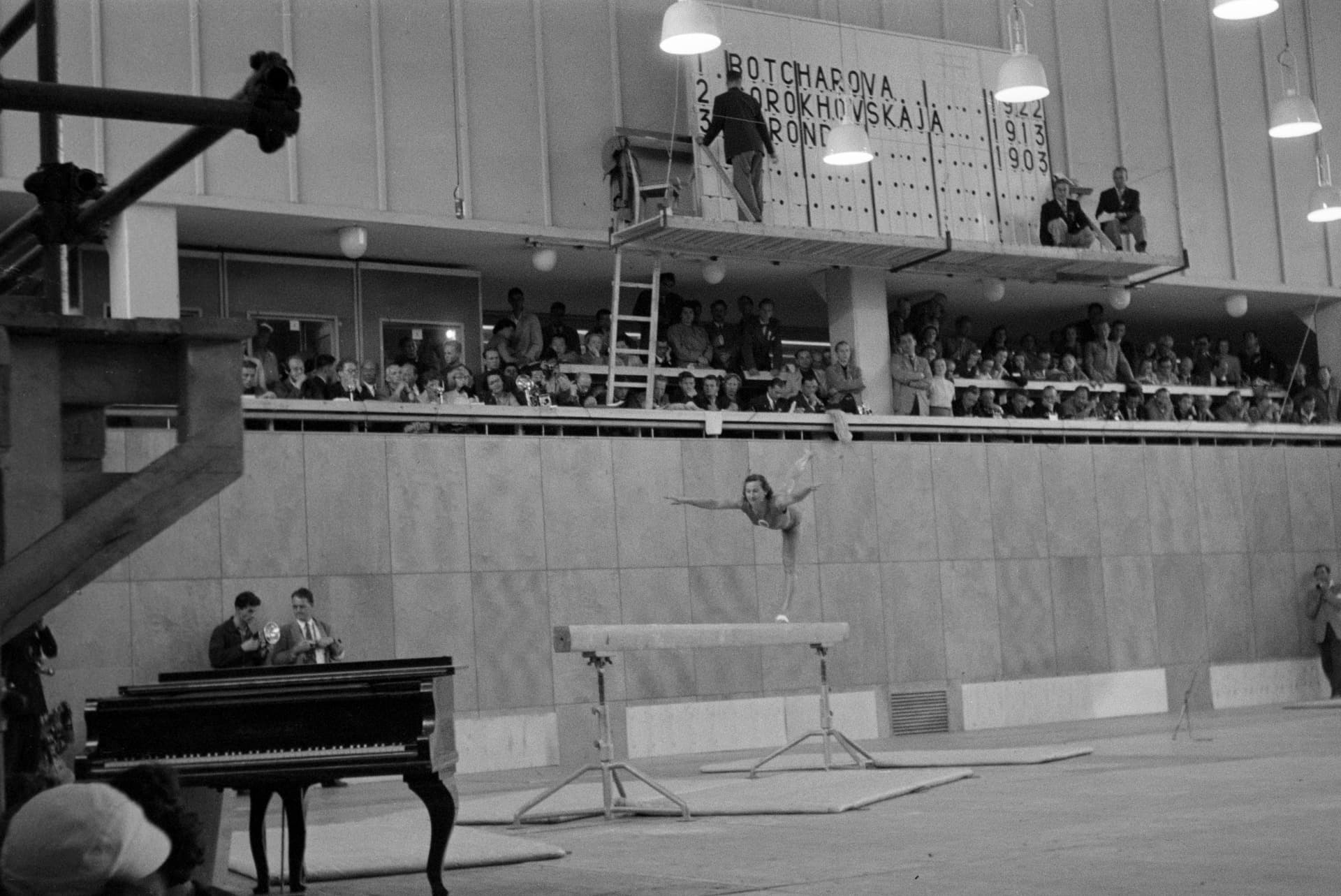
On hands and knees, you reach one arm forward and the opposite leg back, and four points on the ground become two. That is the bird dog. Standing on one leg, you tip forward until your body and your back leg make one level line. That is Warrior III, and your standing foot makes constant small corrections the whole time.
It works best slowly. Go fast, and momentum carries you through the change. Go slowly, and the small muscles have to hold every moment of it. The moment the support changes is where the learning happens.
08
You feel it as trust.
Progress in balance does not show up as a number. Your standing foot stops fighting. The bird dog stops tipping. The corrections get smaller and fewer.
Then it shows up outside. Your eyes lift from your feet on the rocky descent. You stop braking where you used to. On the gravel road, you stay loose while the bike skips about under you. You have stopped worrying about falling.
09
Try this.
Take your shoes off and stand on one leg. Watch your foot. The toes press, the arch lifts and the ankle shifts, over and over. Those are the small muscles catching you.
Now tip forward slowly into Warrior III and come back up, three times on each leg. Notice where you wobble most. It will be in the change, not in the hold.
On your next rocky descent, notice where your eyes are. Check again in two months.
What this means for you
Balance is confidence you can train. It lets you relax on loose rock and rough roads, because you trust your legs to catch you.
Practise shapes where the support changes, and practise them slowly. Train balance alongside power, structure and range, because the four grow together. You will know it is working when the loose rock stops being a reason to slow down.
Sources
- Gruber and Gollhofer 2004. European Journal of Applied Physiology 92:98-105. Impact of sensorimotor training on the rate of force development and neural activation.
- McGuine and Keene 2006. American Journal of Sports Medicine 34:1103-1111. The effect of a balance training program on the risk of ankle sprains in high school athletes.